
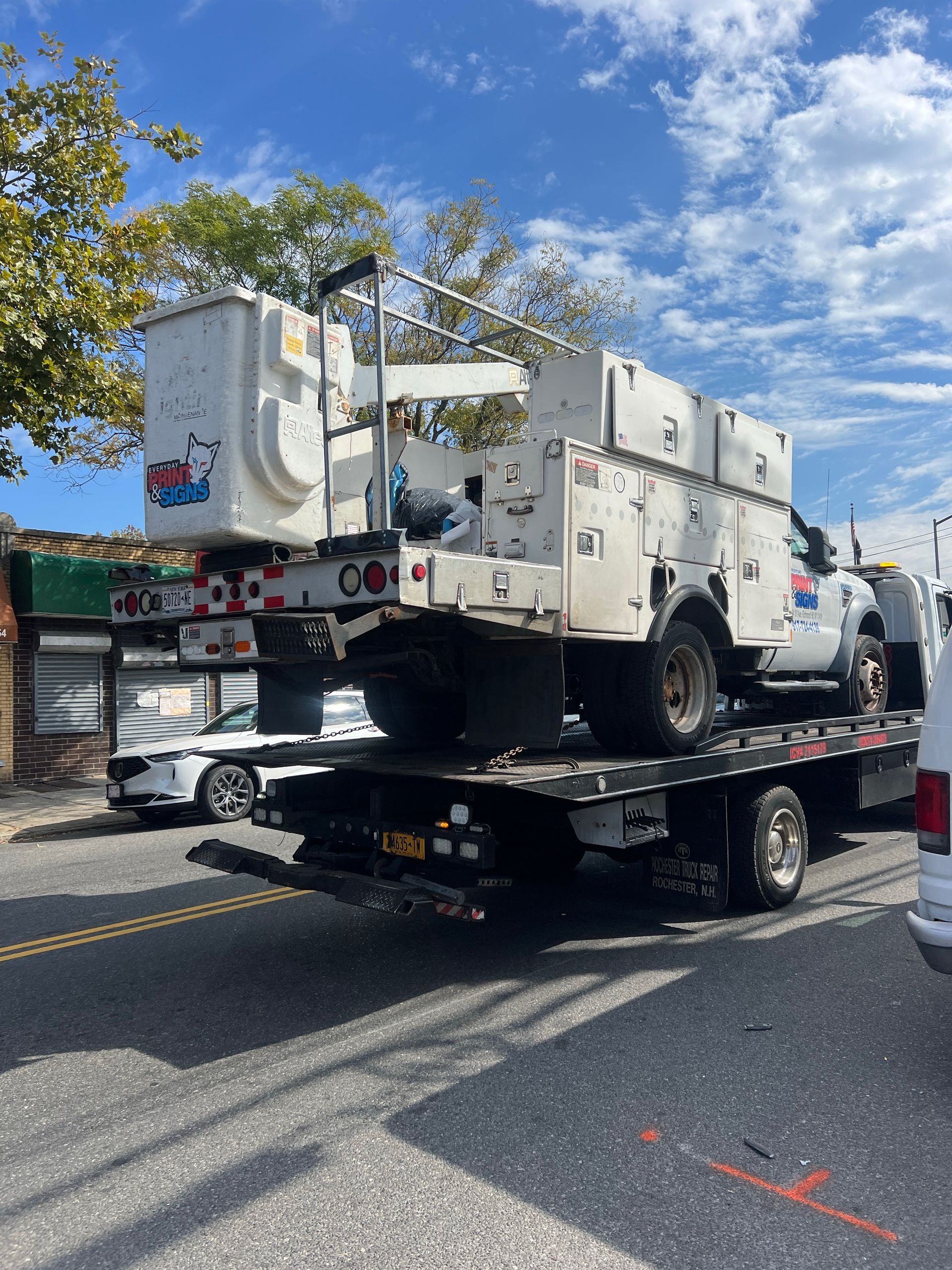
Machinery Transport That Handles Real Construction Loads
Heavy Equipment Towing in Queens for excavators, bulldozers, skid steers, and oversized construction machinery requiring secure transport between job sites
Moving an excavator or bulldozer between job sites introduces immediate logistical challenges that standard tow services cannot address. And 1 Towing Inc provides heavy equipment towing in Queens and Cambria, handling oversized machinery with specialized equipment designed specifically for construction loads. When you need to relocate a skid steer to a repair facility or move a bulldozer to a storage yard, the process requires trailers rated for concentrated weight, operators trained in load distribution, and securing methods that prevent shifting during highway transport.
Heavy equipment towing addresses the gap between standard vehicle recovery and the demands of construction machinery that can weigh tens of thousands of pounds with unusual dimensions and ground clearance requirements. The service uses lowboy trailers, hydraulic ramps, and winching systems calibrated for equipment that cannot be driven onto a flatbed under its own power. Operators assess each piece of machinery for center of gravity, track width, and attachment configurations before determining the safest loading approach.
Schedule a transport consultation to review your equipment specifications and site access requirements.
What Proper Heavy Equipment Transport Requires
Transporting construction machinery begins with matching the trailer type to the equipment's weight distribution and dimensions, not simply its total tonnage. A skid steer with a narrow wheelbase requires different securing points than a tracked excavator with an extended boom, and operators measure ground clearance to confirm ramp angles will not contact the undercarriage during loading. Chains are positioned at manufacturer-recommended tie-down points, and tension is applied in stages to prevent frame stress while ensuring zero movement during transit.
Once the equipment is secured and transported, you will notice machinery arrives at the destination with hydraulic lines intact, no frame damage from improper chain placement, and attachments still aligned as they were at pickup. And 1 Towing Inc documents the equipment condition before and after transport, providing verification that nothing shifted or sustained impact during the move. The difference becomes clear when equipment is immediately operational at the new site rather than requiring recalibration or repairs caused by transit damage.
Heavy equipment towing includes route planning to avoid low clearance bridges, weight-restricted roads, and narrow streets that cannot accommodate trailer turning radius. Some moves require pilot vehicles or permit coordination depending on equipment height and width, factors that get evaluated during the initial transport assessment rather than discovered en route.
What Contractors Usually Ask
Questions about moving construction machinery between sites, repair facilities, and storage locations come up frequently for contractors managing equipment fleets in Queens and Cambria.
What determines whether equipment can be loaded under its own power or requires winching?
If the machinery is operational and the ramp angle stays within safe operating limits for that equipment type, self-loading is possible, but non-running equipment or steep ramp configurations require winch-assisted loading to prevent rollovers or loss of control during the transition from ground to trailer deck.
How is equipment secured differently than vehicles during transport?
Construction machinery uses frame-mounted tie-down points rather than axle or suspension attachment, and chains are positioned to counteract both forward momentum and lateral shifting, with tension patterns adjusted based on whether the equipment has tracks, wheels, or outriggers that affect stability.
What site access requirements affect heavy equipment pickup?
The tow truck and trailer combination requires enough clearance to maneuver into position alongside the equipment, typically needing at least twelve feet of width and room to extend ramps without obstruction from fencing, parked vehicles, or overhead utilities.
When should equipment be transported rather than driven between sites?
Any move exceeding five miles or crossing highways makes transport safer and more cost-effective than operating the machinery on public roads, where track damage to pavement, slow travel speeds, and visibility limitations create liability and efficiency concerns.
What documentation accompanies heavy equipment transport in New York?
Transport includes a condition report noting existing damage, fluid levels, and attachment positions at pickup, plus routing details that verify weight compliance and permit adherence for oversized loads moving through Queens and surrounding areas.
And 1 Towing Inc handles heavy equipment moves with operators trained in construction machinery dynamics and trailer configurations built for oversized loads. Arrange an equipment assessment to confirm transport requirements for your specific machinery and destination site.